MATERIALS, EXPLAINED
PET / AL / PA / RCPP: A Barrier Built for Retort Packaging
A four-material construction that combines a printable surface, aluminium foil, nylon support and a retort sealing layer. Explore its roles and the questions to ask before sampling.
Explore this structure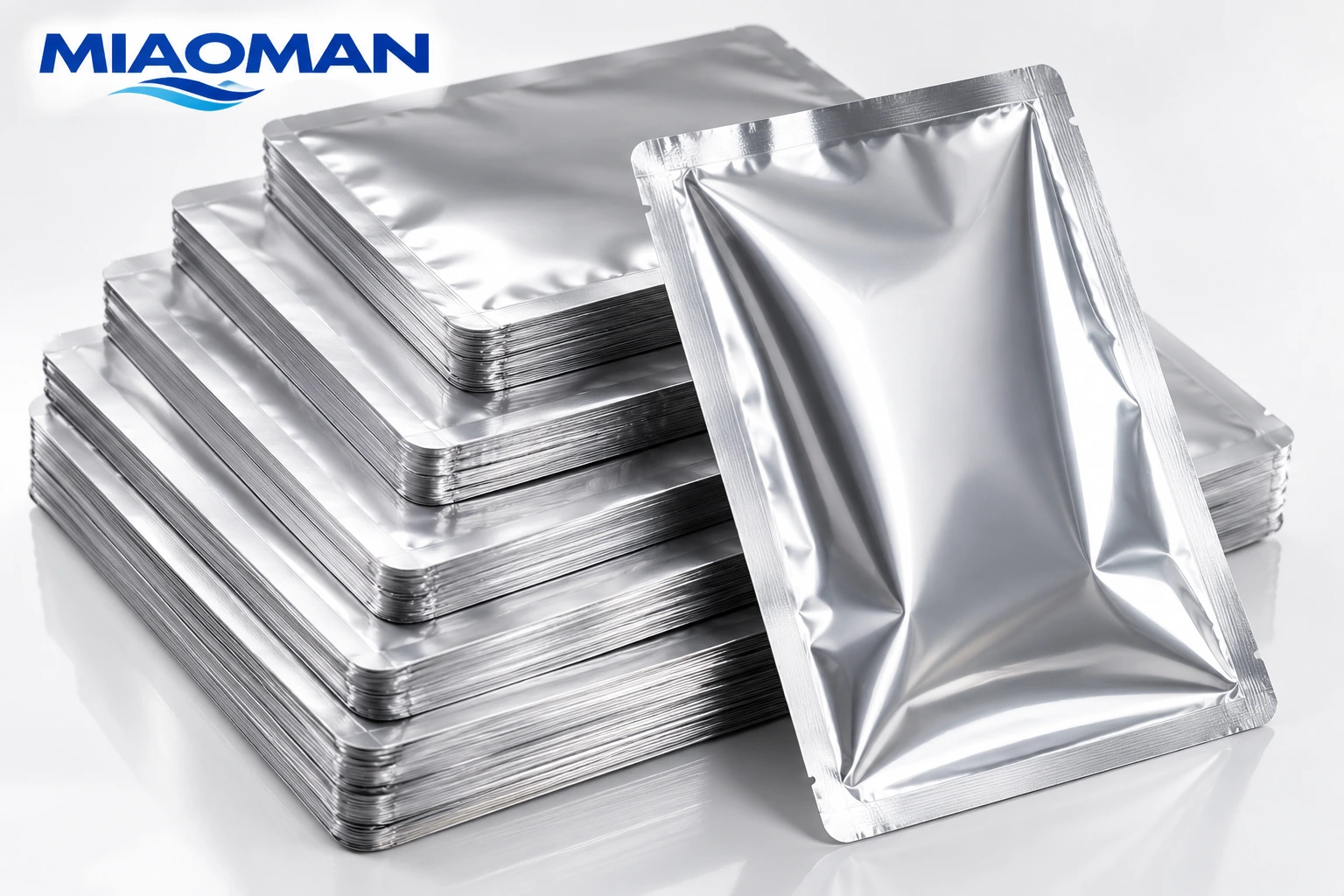
For foods that need an opaque pack and a retort-oriented laminate, each layer has a distinct job. PET / AL / PA / RCPP combines a PET outer surface, an aluminium foil barrier, nylon support and an RCPP inner sealing layer. The result is a structure to evaluate as part of a validated packaging and thermal process.
À L'INTÉRIEUR DE LA STRUCTURE
Différentes couches. Une solution bien pensée.
Examinez la structure depuis la surface extérieure jusqu'à la couche d'étanchéité interne.
Layer 1 · Outer surface
PET
PET provides a surface for printing and contributes stiffness to the finished pouch. Artwork and print coverage can be tailored to your product.
Layer 2 · Aluminium foil barrier
AL
Foil creates an opaque layer that blocks light and contributes high oxygen and moisture barrier performance when the laminate remains intact.
Layer 3 · Mechanical support
PA
The nylon layer contributes toughness and puncture resistance to support the complete laminate during filling and handling.
Layer 4 · Retort sealing layer
RCPP
Retort-grade cast polypropylene forms the inner sealing surface. Select its grade and sealing conditions for the intended thermal process.
Un détail qui mérite d'être vérifié
Retort conditions must be confirmed for the exact finished pouch and food process. No single time-and-temperature setting applies to every laminate.
OÙ L'UTILISER
Conçu pour s'adapter à votre façon de faire vos valises.
01
Light-sensitive products
An opaque foil construction is an option where keeping light away from the contents is part of the packaging brief.
02
Retort food formats
Consider the structure for retort-processed meals, sauces or protein products, subject to a validated product, pouch and process combination.
03
Printed presentation
The PET outer surface supports a branded pack. Confirm artwork, pouch dimensions, opening features and mandatory label information together.
LE GUIDE DE SÉLECTION
Treat the pouch and thermal process as one specification.
Describe the food, filling conditions and planned thermal process before a sample is selected. Retort suitability is not established by the RCPP name alone: film grades, adhesives, pouch geometry and seal quality all contribute. Confirm the agreed time and temperature with Miaoman, then validate filled packs under your process.
AVANT DE DEMANDER UN ÉCHANTILLON
Quatre conseils pour rédiger un brief plus efficace.
- Product composition, filling temperature and target pack weight.
- Thermal process, pressure conditions and cooling sequence.
- Barrier requirements, pouch dimensions and opening features.
- Seal integrity, laminate appearance and handling after processing.
Indiquez l'utilisation prévue et demandez à Miaoman de confirmer les spécifications complètes des matériaux. Testez les échantillons avec vos contenus et votre équipement réels avant de passer une commande de production.
QUESTIONS FRÉQUENTES
Un peu plus de clarté.
Can customers see the food through this foil pouch?
No. The aluminium foil layer makes this construction opaque. If product visibility matters, compare it with a suitable clear RCPP-based laminate.
Does the structure alone establish shelf life?
No. Shelf life depends on the food, thermal process, seal integrity, storage and distribution. Establish it through the appropriate testing for the final packed product.
TROUVONS VOTRE EMBALLAGE
Apportez-nous votre produit. Nous vous aiderons à concevoir son emballage.
Indiquez-nous le contenu de votre emballage, la taille de votre sachet, la quantité prévue et les conditions de traitement. Nous pourrons alors discuter de la structure, de l'épaisseur, de l'impression et des échantillons.
